

في هذا المقال
30 English Idioms for Kids with Simple Examples
Why Should Kids Learn Idioms
Idioms help children expand their vocabulary and improve their communication skills. They are commonly used by native English speakers in everyday conversations. By learning idioms, children become more confident when reading, listening, speaking, and writing in English
Popular English Idioms for Kids
Here are some fun and useful idioms
Break the ice
Piece of cake
Under the weather
Hit the books
Let the cat out of the bag
Hold your horses
Once in a blue moon
Rain cats and dogs
Spill the beans
On cloud nine
These expressions are easy to learn and frequently used in daily life
Example Sentences
Children can understand idioms better through examples:
The math quiz was a piece of cake for Sarah
Emma stayed home because she was feeling under the weather
Tom told a joke to break the ice on the first day of school
Mia spilled the beans about our secret plan
Lily was on cloud nine after winning the contest
Simple examples help children remember the meanings more effectively
Benefits of Learning Idioms
Learning idioms offers many advantages. First, it improves reading comprehension because many stories and books contain idiomatic expressions. Second, it helps children sound more natural when speaking English. Finally, idioms make learning more enjoyable because many expressions are funny and imaginative
Teachers and parents can introduce one new idiom each day and encourage children to use it in conversations or writing activities
Tips for Teaching Idioms to Children
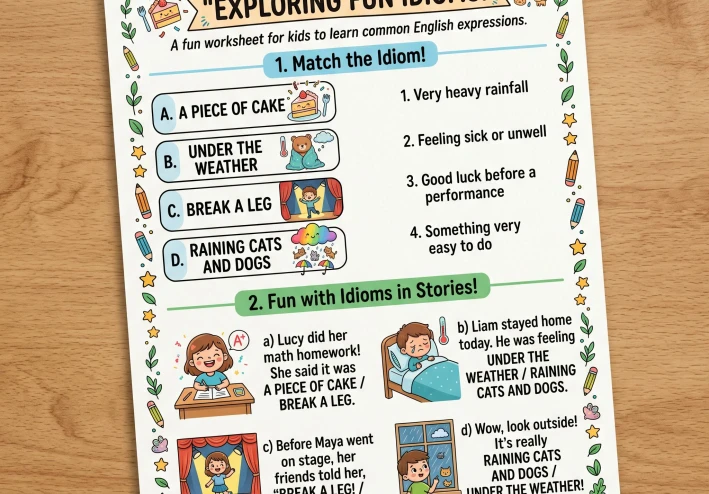
One of the best ways to teach idioms is through colorful illustrations and worksheets. Visual learning helps children connect the expression with its meaning. Educational games, flashcards, and storytelling activities can also make idiom practice more engaging
Using worksheets that include pictures, definitions, and example sentences is especially effective for young learners
Conclusion
English idioms are a fun and valuable part of language learning. They help children understand real-life English, improve communication skills, and build confidence. By practicing common idioms regularly, kids can develop stronger vocabulary and become more fluent English speakers
Start with simple idioms such as "Piece of Cake" and "Break the Ice," and gradually explore more expressions as children's language skills grow
Final Thoughts
Learning English idioms is a wonderful way for children to make their language skills stronger and more expressive. Idioms are used every day by native speakers, and understanding them can make conversations, books, and movies much easier to enjoy. By learning a few idioms at a time and practicing them regularly, children can build confidence and improve their vocabulary in a fun and meaningful way
Parents and teachers can support learning by using colorful worksheets, games, and illustrations that help children remember each expression. Activities such as drawing, storytelling, and role-playing make idioms more memorable and enjoyable. With patience and practice, children will soon be able to recognize and use many common idioms naturally in their everyday English communication
The more idioms children learn, the more confident they become as English speakers. Every new idiom is another step toward better understanding, stronger communication skills, and greater success in learning English







النقاش
التعليقات (0)
فكرة تضيفها، أو سؤال يفتح حوارًا.
الرجاء تسجيل الدخول لتتمكن من التعليق