

في هذا المقال
Why Arithmetic Skills Matter More Than Ever
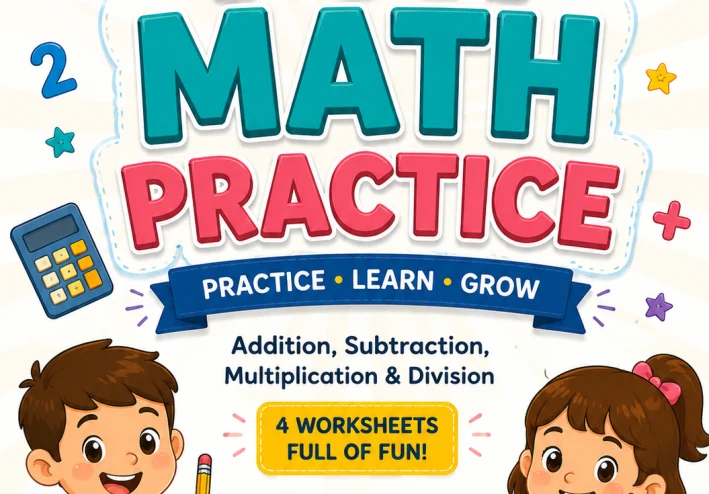
Mathematics is much more than a school subject. It is a life skill that children use every single day, often without even realizing it. Whether they are counting toys, sharing snacks with friends, telling time, shopping with their parents, or solving simple problems, arithmetic is quietly shaping the way they think and make decisions.
The four basic arithmetic operations—addition, subtraction, multiplication, and division—are the building blocks of mathematical thinking. When children develop confidence in these skills early, they become better problem-solvers, stronger critical thinkers, and more independent learners.
The Benefits of Learning Arithmetic at an Early Age
Strong arithmetic skills provide children with lifelong advantages. They help students:
- Develop logical and analytical thinking.
- Improve memory and concentration.
- Build confidence when solving problems.
- Understand patterns and relationships.
- Prepare for advanced math topics such as fractions, algebra, geometry, and statistics.
- Make better decisions in everyday situations.
Children who master basic calculations often feel more comfortable participating in class because they trust their own abilities. This confidence frequently extends beyond mathematics and positively influences other academic subjects as well.
How Arithmetic Helps in Everyday Life
Many children ask, “Why do I need math?” The answer is simple: we use it every day.
Arithmetic helps children:
- Count money while shopping.
- Tell the time accurately.
- Measure ingredients when cooking.
- Divide food equally among friends.
- Calculate scores in games and sports.
- Estimate distances and travel time.
- Organize schedules and daily routines.
These everyday experiences show children that mathematics is not just about numbers on a worksheet—it is a practical tool that helps them navigate the world.
The Teacher’s Role in Making Math Enjoyable
A great math teacher does much more than explain formulas. The teacher creates an environment where children feel curious, motivated, and confident enough to explore mathematical ideas.
Today’s classrooms should move beyond memorization. Instead, teachers can introduce arithmetic through:
- Interactive games.
- Hands-on activities.
- Math puzzles.
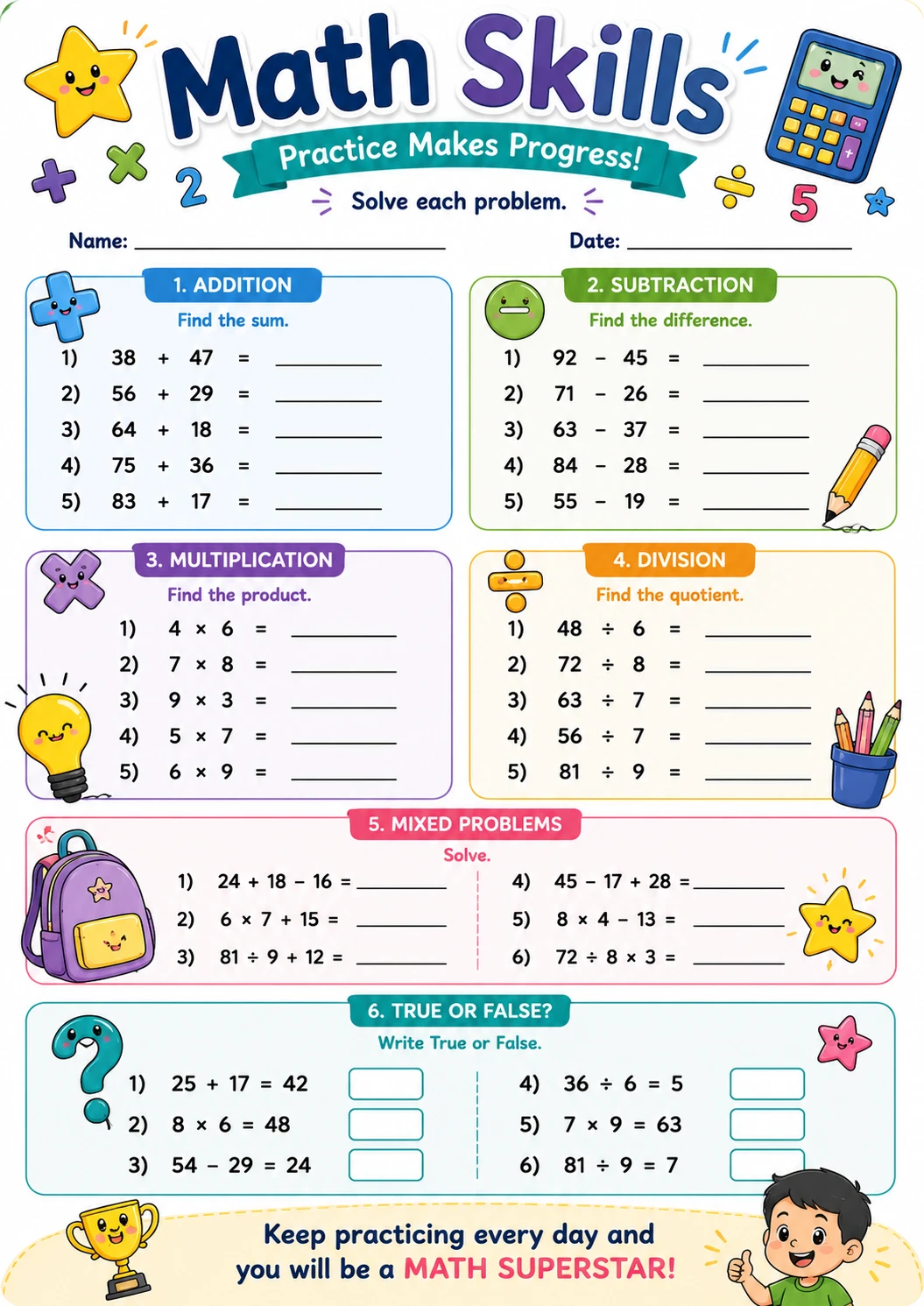
- Educational worksheets.
- Story-based word problems.
- Team challenges.
- Digital learning tools.
- Real-life examples.
When lessons are engaging and enjoyable, children become active participants rather than passive learners. Learning through play reduces anxiety and helps mathematical concepts stay in long-term memory.
Every child learns differently. Some children understand visually, others learn through movement, discussion, or practical activities. Effective teachers recognize these differences and adapt their teaching methods to meet every learner’s needs.
Why Educational Games Make a Difference
Children naturally enjoy playing. When arithmetic is combined with fun activities, learning becomes exciting rather than stressful.
Educational math games help children:
- Practice calculations without feeling pressured.
- Increase attention and focus.
- Strengthen problem-solving abilities.
- Encourage healthy competition.
- Build perseverance.
- Improve speed and accuracy.
Instead of seeing mistakes as failures, children begin viewing them as opportunities to learn and improve.
Parents Are Essential Partners in Learning
Learning mathematics does not end when school finishes for the day. Parents play an equally important role in helping children build confidence with numbers.
Parents can support their child’s mathematical development by:
- Practicing simple arithmetic during everyday activities.
- Playing educational math games together.
- Encouraging effort instead of focusing only on correct answers.
- Celebrating small achievements.
- Providing a quiet place for homework.
- Using positive language about mathematics.
Even a few minutes of daily practice can make a significant difference over time.
When Teachers and Parents Work Together
The greatest progress happens when teachers and parents share the same goal.
Teachers provide structured instruction, professional guidance, and effective learning strategies. Parents reinforce these skills through daily encouragement, practice, and emotional support.
Together, they create a consistent learning environment where children feel motivated to grow, ask questions, and overcome challenges.
This partnership builds not only stronger math skills but also confidence, resilience, and a lifelong love of learning.
Building a Generation That Loves Mathematics
Children are not born believing that math is difficult. Their attitude is shaped by their experiences.
When arithmetic is taught with creativity, patience, encouragement, and meaningful activities, children begin to see mathematics as something enjoyable rather than intimidating.
By combining engaging teaching methods, educational games, supportive parents, and dedicated teachers, we can raise a generation of confident learners who are ready to face academic challenges and everyday life with strong mathematical skills.
Final Thoughts
Arithmetic is far more than learning how to add or subtract numbers. It is the foundation for logical thinking, decision-making, financial literacy, and lifelong problem-solving.
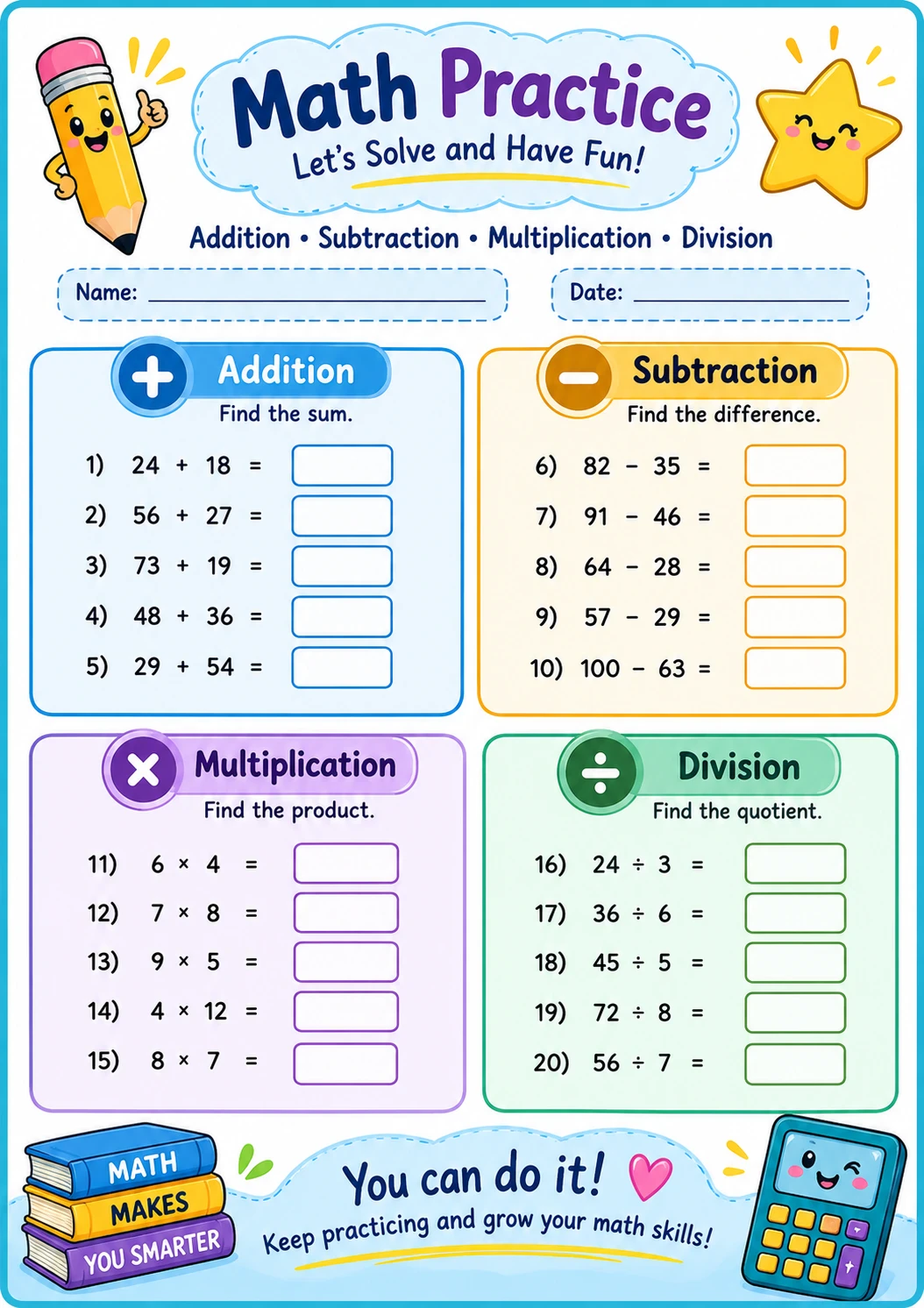
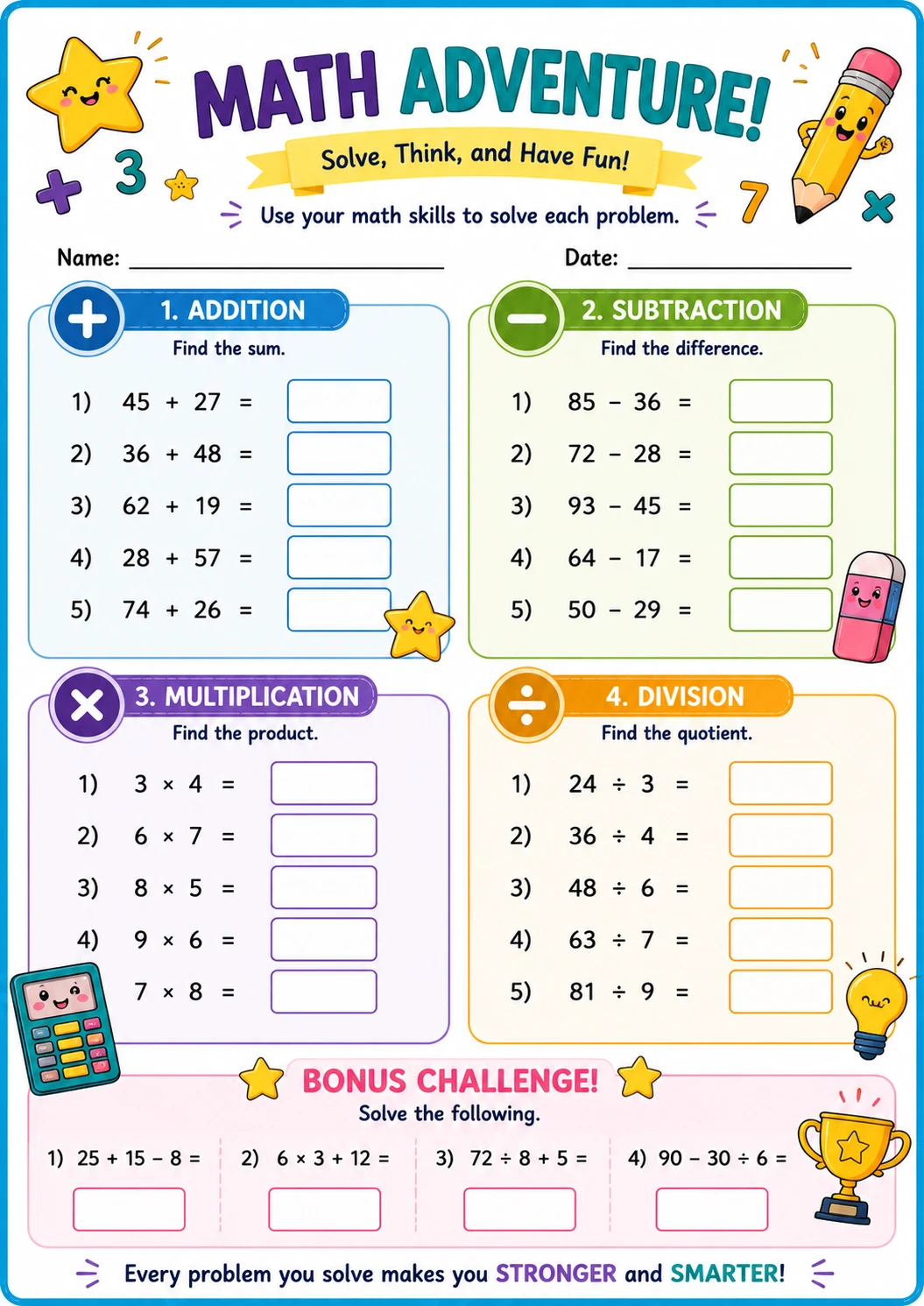
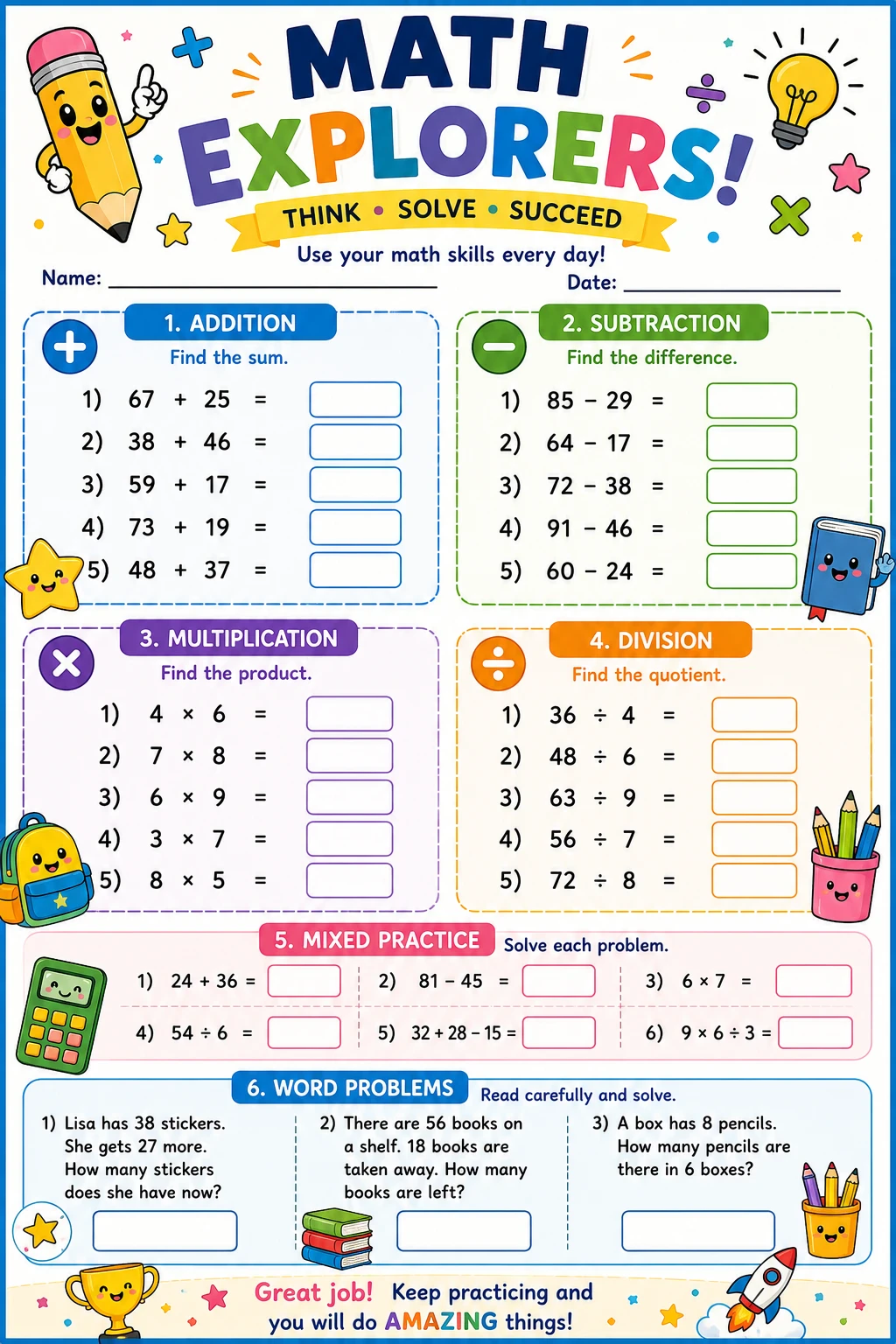
Every worksheet completed, every math game played, and every encouraging word from a teacher or parent helps shape a child’s future.
When schools and families work hand in hand, children don’t simply learn mathematics—they develop the confidence to succeed in every area of life.
تابع جديد Math Nest
اختر إشعارات الموقع أو البريد أو الاثنين. الزائر يقدر يشترك ببريده دون تسجيل حساب.
الإبلاغ عن المقال
لو لاحظت مشكلة في المحتوى، أرسلها لفريق المراجعة. لن تظهر بياناتك لكاتب المقال أو للقراء.
تعذّر إرسال البلاغ الآن. حاول مرة أخرى لاحقًا.
سجّل الدخول لإرسال بلاغ






النقاش
التعليقات (0)
فكرة تضيفها، أو سؤال يفتح حوارًا.
الرجاء تسجيل الدخول لتتمكن من التعليق