

In this article
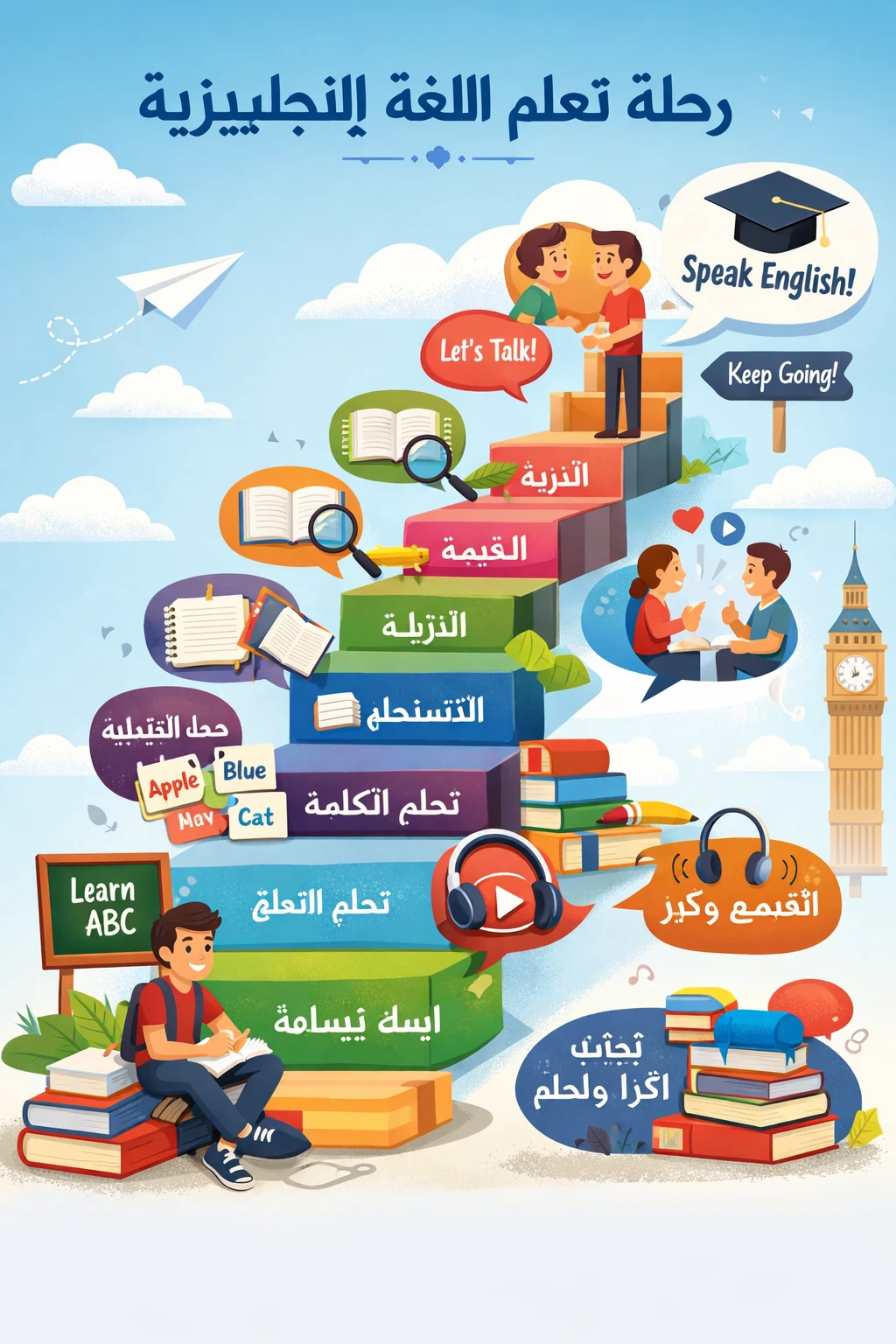
The Journey of Learning English from Zero to Professional
Introduction
Learning English has become one of the most important skills anyone needs in this modern age, whether you are a student, an employee, or someone who wants to improve themselves. English is no longer just a school subject; it is a tool for communicating with the world, accessing different sources of knowledge, and opening many doors in education and career opportunities. Some people may think that learning English is difficult or takes a very long time, but the truth is that it depends on your learning method and your level of commitment and consistency. The more organized you are and the more time you dedicate daily, even if it’s just a little, the more progress you will notice over time. So don’t let the fear of starting stop you—begin with simple steps and be patient with yourself, because every skill takes time to master.
Learning the Basics
The first step in your journey is learning the basics, as they form the foundation for everything you will build later. Start by learning the English alphabet (ABC) and how to pronounce it correctly, as proper pronunciation helps you understand and speak better. Then move on to simple daily vocabulary such as numbers, colors, days of the week, and common objects you use in your daily life. Try to learn a small number of words each day, such as 5 to 10 words, and don’t pressure yourself to learn too many at once. The most important thing is not just memorization, but usage. Try to put each new word into a simple sentence. For example:
I read a book
I drink water
This method helps you remember words better and makes it easier to use them in different situations. Over time, you will notice your vocabulary growing gradually.
Learning Grammar
Grammar is an important part of the language, but it should not be a source of stress or complexity. Many learners make the mistake of trying to memorize all grammar rules at once, which leads to frustration. It is better to start with the basics, such as forming a simple sentence: subject + verb + object. Examples:
I eat
I play
I study
Focus on understanding rather than memorizing, because understanding allows you to apply the rules in different situations. Once you master the basics, you can gradually move on to other tenses like past and future, but don’t rush this step. Step-by-step learning is the key to mastering grammar.
Developing Listening Skills
Listening is one of the first skills you should focus on because it helps you understand how native speakers actually use the language. Try listening to simple videos or short conversations in English. At first, you may not understand everything, and that’s completely normal. Don’t stop at every unknown word; instead, try to understand the general meaning. With repetition, your ears will get used to the sounds, and your understanding will improve significantly.
Developing Reading Skills
Reading helps you expand your vocabulary significantly. Start with simple texts such as short stories or easy articles. Don’t try to translate every single word—focus on understanding the general idea first. Then you can go back and learn the meanings of new words. This method helps you learn naturally and efficiently.
Developing Writing Skills
Writing is an effective way to reinforce what you have learned. Try writing daily sentences about your life, such as what you did during the day or what you plan to do tomorrow. For example:
Today I studied English
I went to the market
Don’t worry about mistakes at the beginning—the goal is practice. Over time, your writing will improve noticeably.
Developing Speaking Skills
Speaking is the main goal of learning any language. Try to speak even if it’s just to yourself, or record your voice and listen to it. You can also practice speaking with friends who are learning or through language apps. Don’t be afraid of making mistakes, because mistakes are the best way to learn. The more you speak, the more confident you become.
Important Tips
Consistency is the most important factor for success. Don’t study one day and stop for several days—make learning a daily habit. Set a fixed time each day, even if it’s only 20 minutes. Try to make English a part of your daily life, such as watching videos or listening to songs in English. Also, don’t compare yourself to others, because everyone has their own learning pace and method.
Conclusion
In the end, learning English is a journey that requires patience and commitment. Don’t expect immediate results, but be sure that every effort you make will pay off. Enjoy the process and consider every step as progress. Over time, you will find yourself able to understand and speak with confidence. Don’t delay starting—begin today, because the best time to learn is now. Keep trying and never give up, because every day you learn something new brings you closer to your goal. Remember that success does not come suddenly; it is the result of small, consistent efforts. Stay motivated, keep learning, and you will succeed.









Discussion
comments (0)
Share a perspective. Start a thoughtful conversation.
please login to be able to comment